Sustainability
Designing with tomorrow in mind
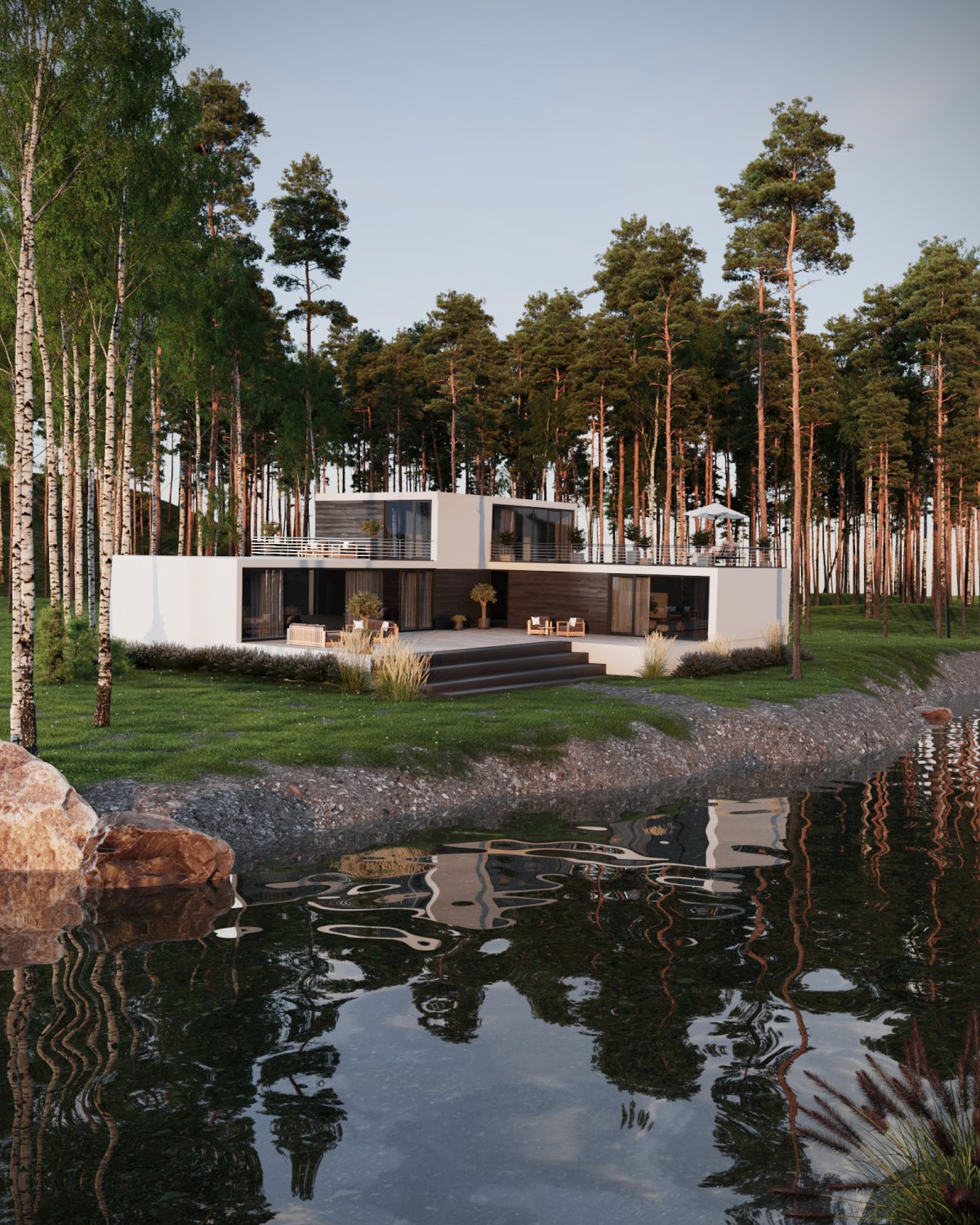
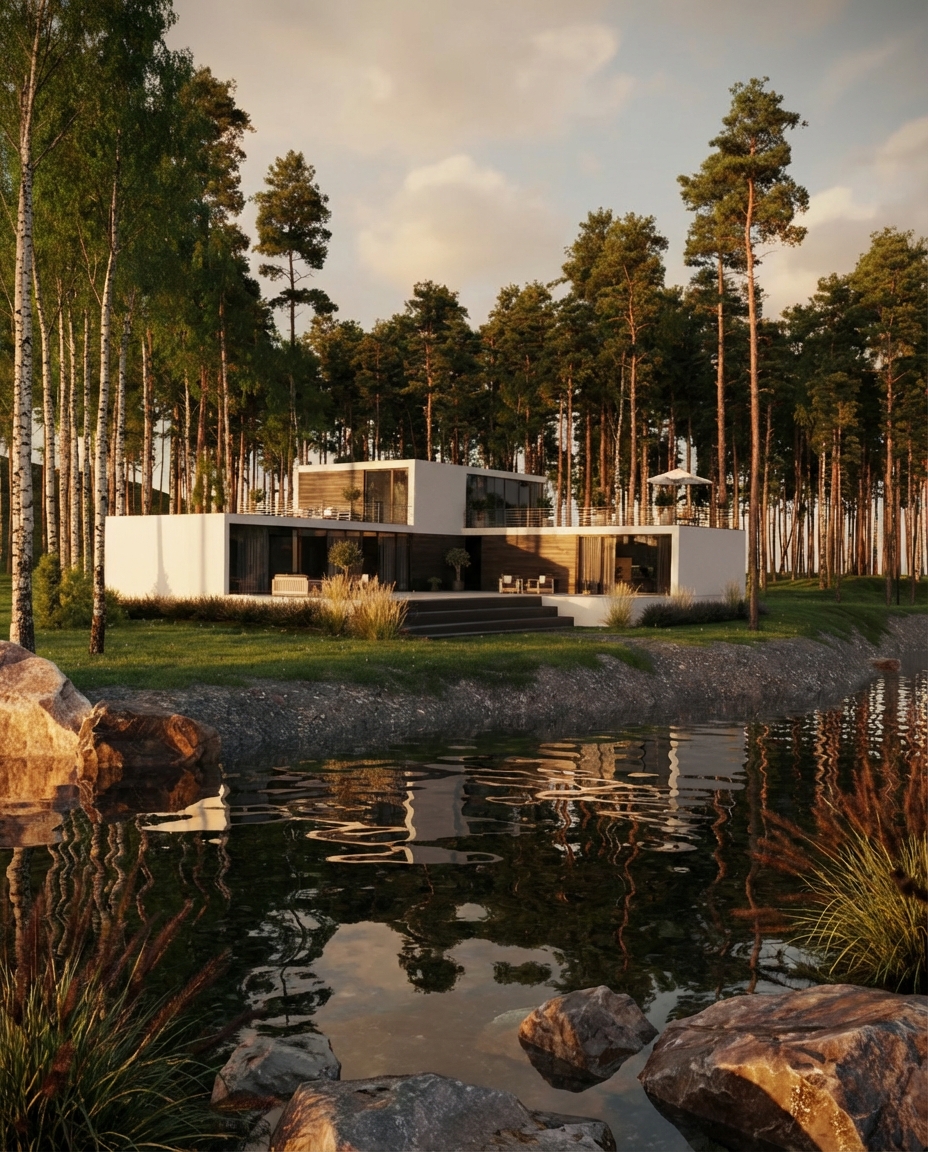
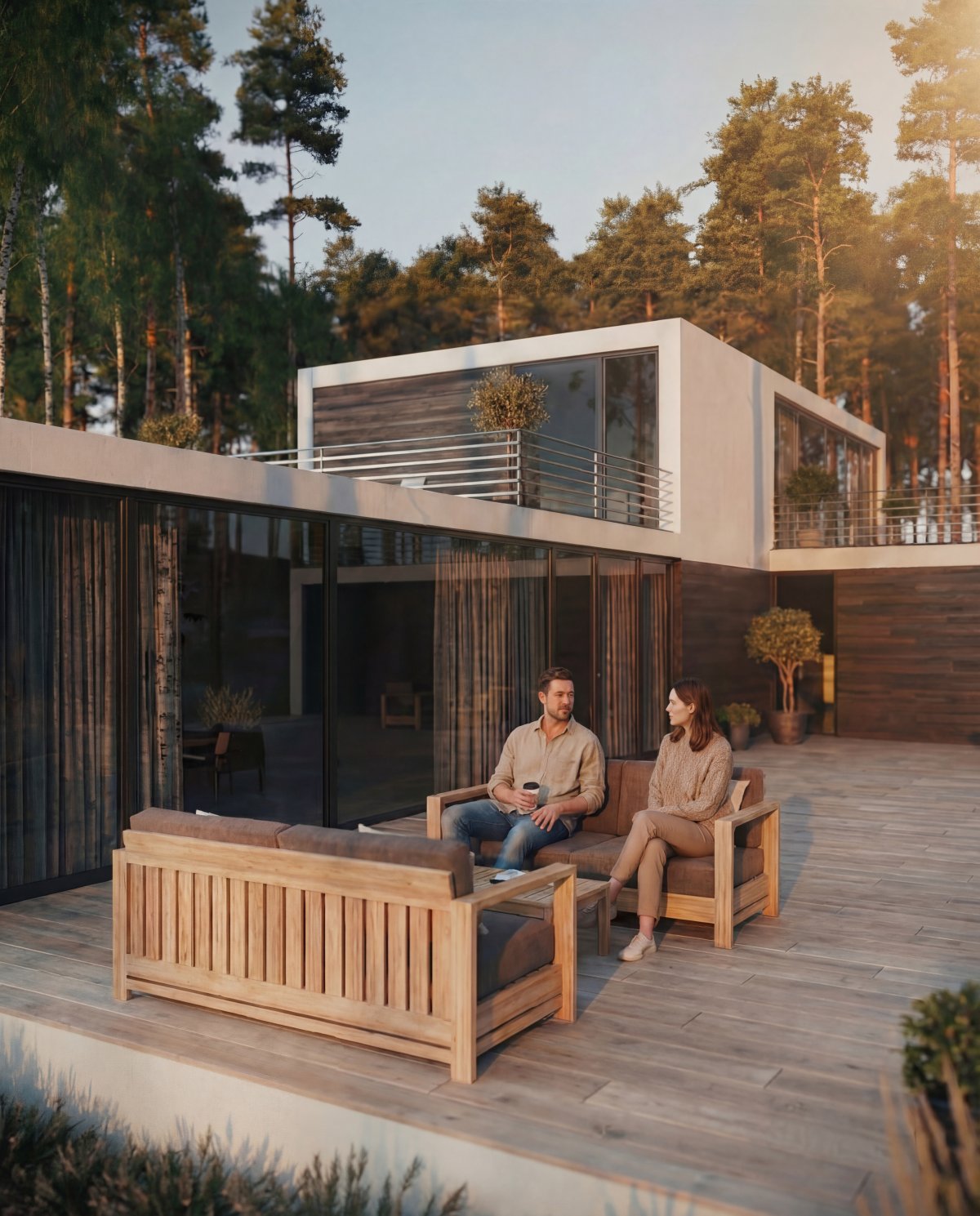
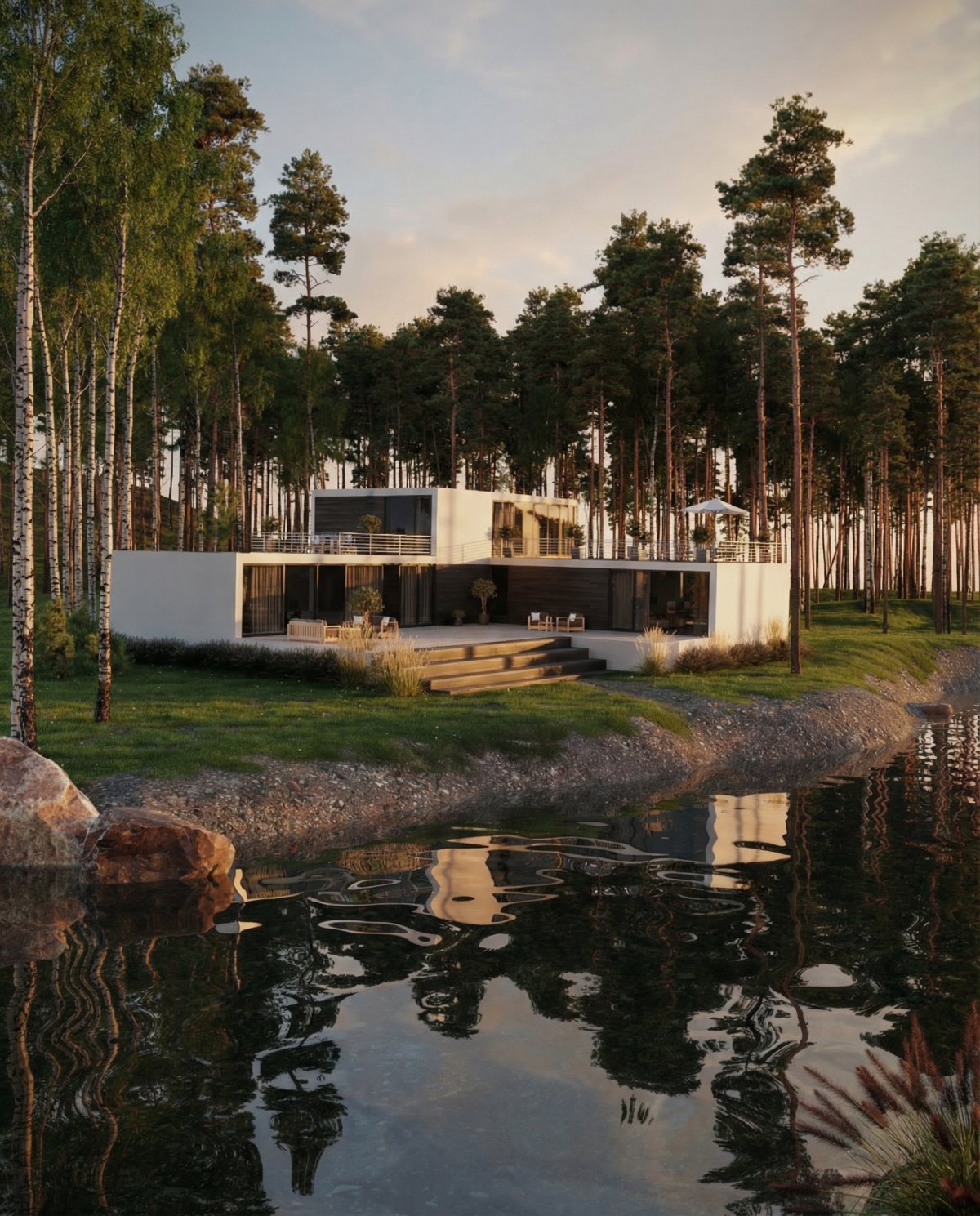
This visualization captures the essence of a home that prioritizes living with rather than against the natural environment — a quiet, elegant example of how thoughtful siting, biophilic principles and passive environmental strategies can create spaces that feel restorative, timeless and responsible. Ideal foundation for further green enhancements The flat roof areas and discreet rear/side elevations offer excellent opportunities for rooftop photovoltaic arrays, solar thermal collectors or extensive green roof planting — all without compromising the clean architectural expression visible from the primary approach and living spaces.
Sustainability – Forest Residence
This residence demonstrates how contemporary architecture can coexist in deep harmony with a mature pine and birch forest while preserving the site's natural character. Key sustainable qualities embedded in the design:
This residence demonstrates how contemporary architecture can coexist in deep harmony with a mature pine and birch forest while preserving the site's natural character. Key sustainable qualities embedded in the design:
- Seamless biophilic integration The building is enveloped by existing mature woodland on three sides, creating an immediate and profound connection to nature. No significant tree removal appears necessary — the structure nestles into the forest rather than dominating it.
- Natural water feature as ecological asset The adjacent natural stream is fully preserved and integrated into the composition. It supports local biodiversity, provides passive microclimate cooling through evaporation, contributes to stormwater retention and enhances the biophilic experience for residents.
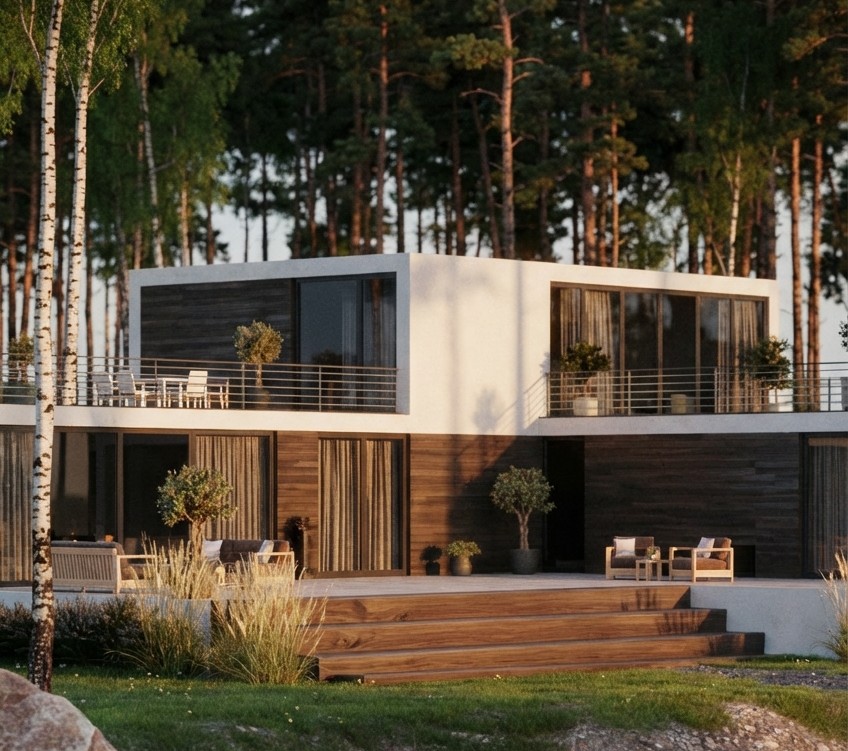
- Optimized daylighting and solar control Floor-to-ceiling glazing maximizes natural light penetration deep into the interior spaces, significantly reducing the need for artificial lighting during daytime hours. Interior shading systems are visible across all major openings, allowing precise seasonal control of solar heat gain and glare while maintaining unobstructed forest views.
- Low visual & ecological footprint Horizontal massing and restrained height keep the building profile low in the landscape. The design avoids aggressive site grading — the structure appears to float gently above the natural terrain, minimizing soil disturbance and preserving existing hydrology.
- Material palette supporting sustainability potential Combination of light concrete, dark timber cladding and large glass surfaces lends itself naturally to high-performance, low-impact material choices (e.g. FSC-certified or reclaimed wood, low-carbon concrete mixes, triple glazing with low-E coatings — features that can be seamlessly incorporated without altering the visual language).